

Just before dawn on 27 April 1521, three longboats drifted to a stop in the shallows off the island of Mactan. They could go no farther. A reef and a field of rocks lay between the boats and the beach. So Ferdinand Magellan, captain general of a Spanish fleet, swung his legs over the side and dropped into water up to his thighs. Forty-eight men in steel breastplates and helmets followed him. Antonio Pigafetta, a young Italian volunteer, waded in beside his captain and would live to write it all down.
Ahead of them, strung along the sand in three divisions, waited the warriors of Lapulapu, a chief of Mactan. Pigafetta counted more than 1,500 of them, and we should treat that number as his. They carried iron-tipped spears, bamboo lances, fire-hardened stakes, and bows with poisoned arrows. And they had worked out something that Magellan, a veteran of wars in India and Morocco, had never been forced to learn: where a man in armor is soft.
100% Free · iPad app, Android tablet app, and Apple Books interactive edition
Magellan’s men were out of their depth the moment they stepped off the boats. Empires & Interconnections, our free app for the age when the world got smaller, puts students in the same era and the same kind of choice, from Luis in the jungles of Peru to Ishi in the court of a Japanese warlord. Explore Empires & Interconnections →
An hour in the water
Magellan had planned on shock from the muskets and crossbows in the boats. But the boats were too far out. Pigafetta says the men waded more than two crossbow flights before they reached the shore, and when the gunners finally opened fire, the shots fell short or glanced off wooden shields. Half an hour of noise and smoke, and the islanders were still standing.

What followed was a lesson in reading an enemy. The Spaniards were armored from head to hip, so Lapulapu’s men, Pigafetta writes, aimed at their legs. Arrows and spears came in low. Magellan sent a party to burn the nearest houses, hoping to frighten the defenders. It did the opposite. The sight of twenty or thirty homes going up in flames turned a defense into a fury.
A poisoned arrow struck Magellan in the right leg. He ordered a slow retreat toward the boats, but most of his men simply ran, leaving him with six or eight companions, Pigafetta among them, backing through knee-deep water while the islanders pressed in. The captain general was recognized, and he became the target. A bamboo spear caught him in the face. Another blow took his leg out from under him, and he went down into the surf. Eight Europeans died that morning along with four Cebuano allies who had come to help; Pigafetta counted fifteen dead among the islanders.
Pigafetta’s grief is still raw on the page five centuries later. He calls Magellan our mirror, our light, our comfort and our true guide. The Christian rajah of Cebu then offered as much merchandise as the islanders wanted in exchange for the body. Lapulapu’s people refused. They would keep him, they said, as a memorial of their victory. Magellan’s body was never recovered, and no one knows where it lies.
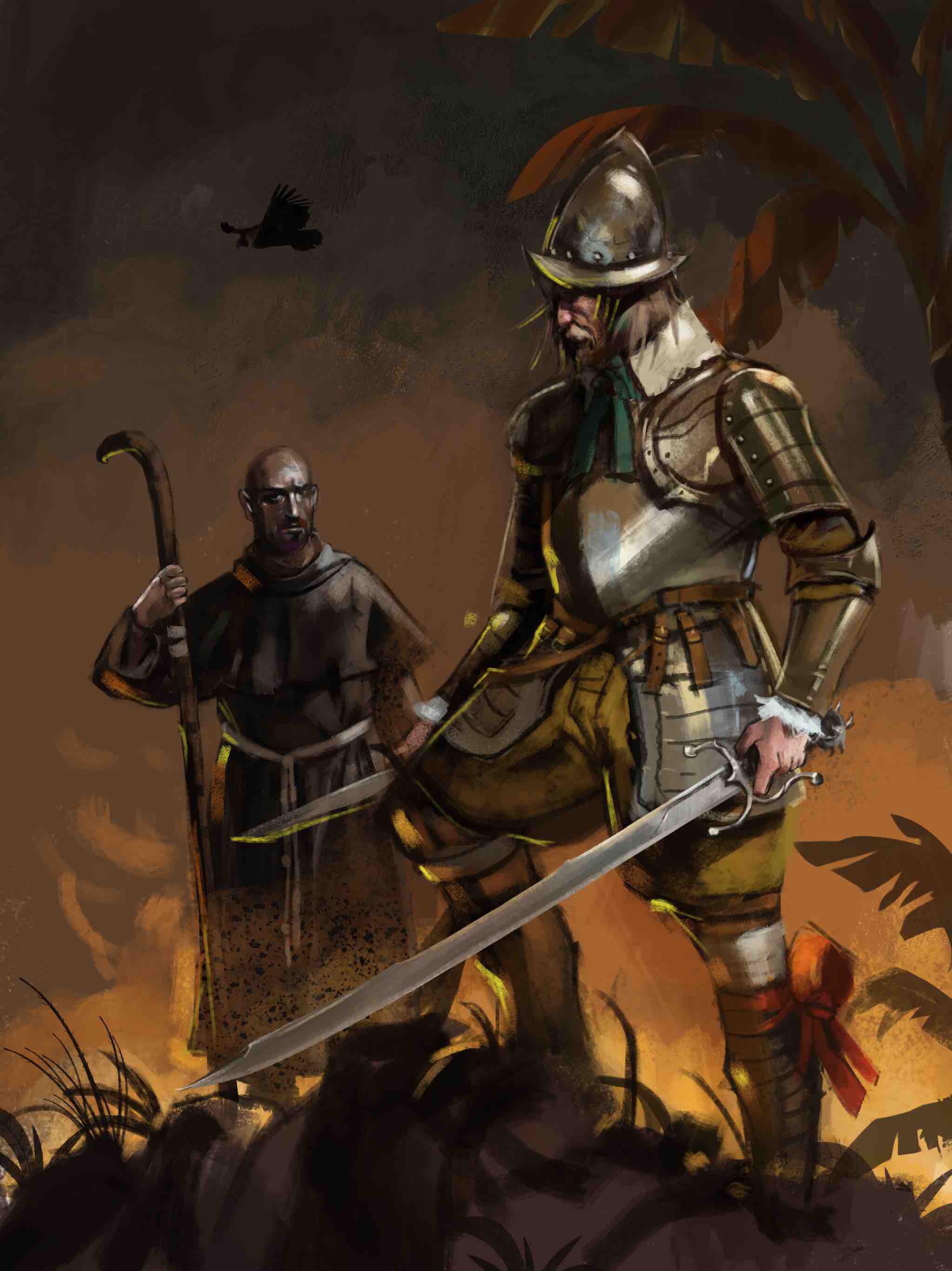
This is the moment we built our app Empires & Interconnections to put students inside: the half-second when a European empire’s confidence meets a local reality it did not understand. Our tagline for the 1450 to 1750 era is “when the world got smaller,” and Mactan is where it got smaller for Magellan. The app does not cover the Philippines, but it explores exactly this era and exactly this kind of choice. Luis, our Spanish adventurer in Peru in 1555, arrives chasing gold and finds disease, war and a jungle that does not care about his armor. Whether he follows the Andean guide Mallco or believes Father Lopez is up to the player, and one road ends with Luis dying under the trees. Magellan, waist-deep off Mactan, faced a version of the same question.
Who was waiting on the beach
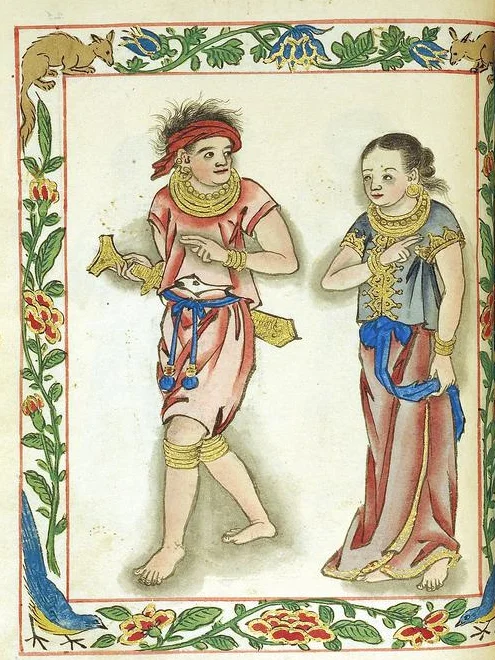
The people Magellan met in the central Philippines were not an isolated tribe on the edge of the world. The Visayans were seafarers and traders, their chiefs wearing gold jewelry and silk from China, their fighters famous for tattoos that recorded every battle. A Spanish manuscript made seventy years later, the Boxer Codex, painted them in gold collars and brightly dyed cotton. Cebu sat on trade routes reaching Borneo, Siam and China. The Spaniards were new. Foreign ships were not.
The key man in Cebu was Rajah Humabon. Two weeks before the battle, on 14 April, he had been baptized as Don Carlos with hundreds of his people, and his wife, christened Juana, received a small image of the Christ child that Cebuanos still venerate today as the Santo Niño. For Humabon the new religion came with a new friend: a fleet with cannon that could help him lean on his neighbors. Magellan, for his part, had drifted from exploration into politics, demanding that the local chiefs recognize Humabon and send tribute to Spain.
On Mactan, across a narrow strait from Cebu, one chief said no. Pigafetta calls him Cilapulapu, and almost everything we know about Lapulapu comes from that one hostile source. We do not know his age, his face, or what he was thinking. We know he refused to bow to Humabon, that Magellan sent him a message offering friendship if he paid tribute and war if he did not, and that he sent back a reply, as Pigafetta reports it, that they had lances too, bamboo ones, and stakes hardened in fire. His officers begged him not to go in person. He went anyway, telling his Cebuano allies to stay in their boats and watch how Spaniards fought.
Why a Portuguese captain was fighting for Spain
Mactan was never the destination. Magellan had sailed from Spain in September 1519 with five ships and about 270 men to reach the Spice Islands, the Moluccas, by sailing west, and claim the clove trade for Spain. He was Portuguese himself, passed over at home and furious about it, which is why he carried the Spanish king’s flag. He found the strait at the bottom of South America that still bears his name, then crossed an ocean so calm he named it the Pacific, for ninety-eight days, while his crews ate sawdust and rats.
By the time he reached the Philippines in March 1521, he was months behind, down to three ships, and badly in need of allies, food and a story to bring home. Enrique, the enslaved Malay interpreter Magellan had bought in Malacca a decade earlier, could suddenly talk to the people on shore. Then Magellan tried to turn a trading visit into a conquest with forty-nine men.

What one morning changed
The expedition fell apart within days. Humabon, now looking at a weakened fleet and a very visible defeat, invited the surviving officers to a feast on 1 May and had most of them killed. The survivors burned one ship for want of hands and fled south. Juan Sebastián Elcano eventually brought the Victoria home to Spain on 6 September 1522 with eighteen survivors and a hold full of cloves, completing the first circumnavigation of the world. Magellan gets the credit in textbooks. Elcano, and the ship, did the finishing.
Our view: Mactan mattered more than its size suggests. It did not stop the age of empires. Spain came back, with Miguel López de Legazpi in 1565, and founded Manila in 1571. But that is half a century later, two generations in which the islands traded, fought and prayed on their own terms. A single morning in the shallows cost Spain its most driven captain and proved that steel and gunpowder were not magic. They were tools, and tools can be beaten by people who know their own ground.
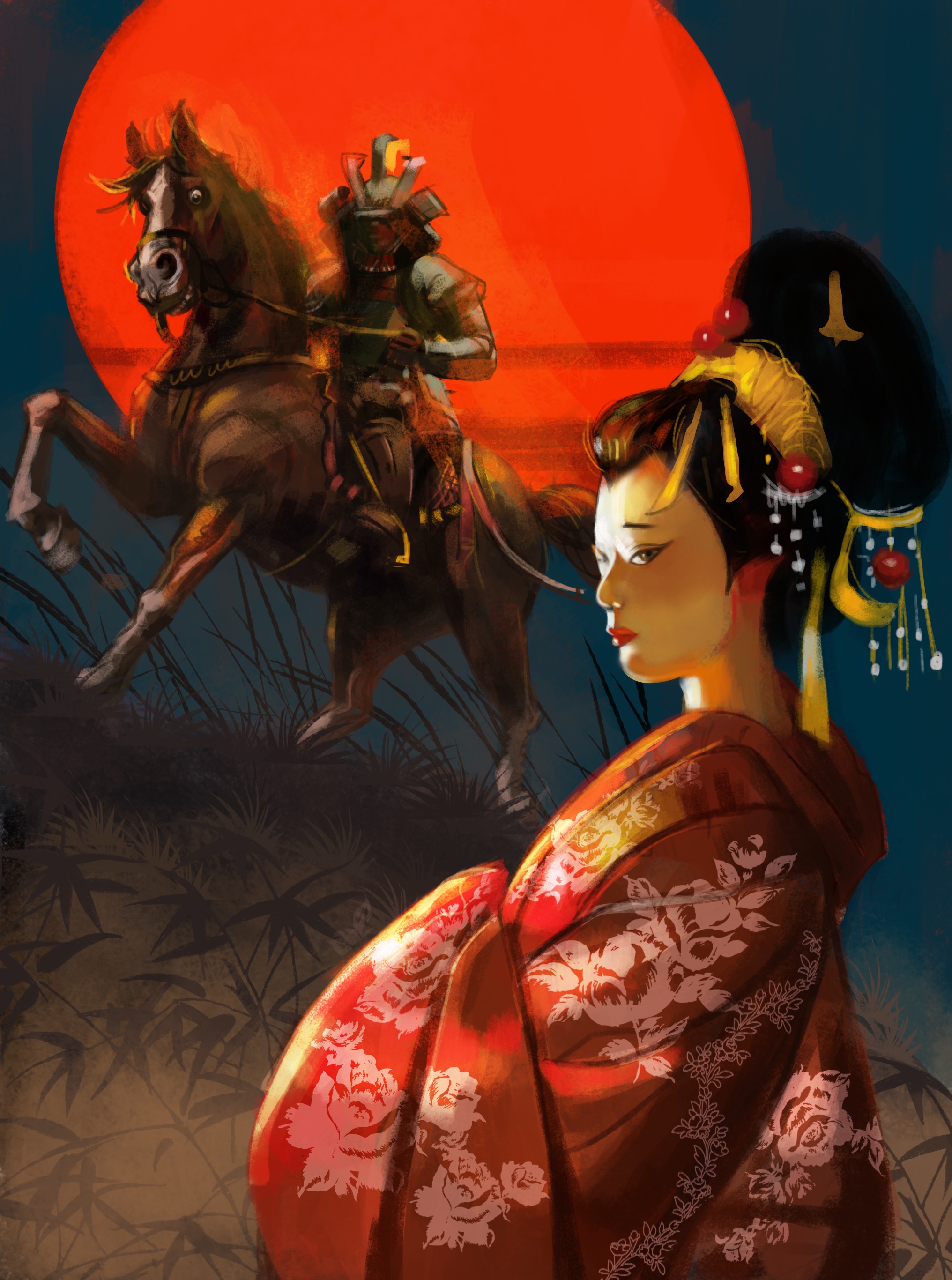
That is the lesson our character Ishi lives with in Japan in the 1600s, advising a powerful warlord on what to do about the Europeans and their missionaries. Engagement or isolation: his counsel shapes Japan’s path. Put yourself on that beach, or in that council chamber. What would you have done?
How Mactan is remembered
In the Philippines, Lapulapu is the first hero: the first Filipino to turn back a European invader. The town of Opon on Mactan was renamed Lapu-Lapu City in his honor in 1961. His face has appeared on coins, and a twenty-foot bronze of him stands at the Mactan Shrine in Punta Engaño, near the spot where the longboats grounded. April 27 is Lapulapu Day. Every year the battle is reenacted on the beach, and every year Lapulapu wins.
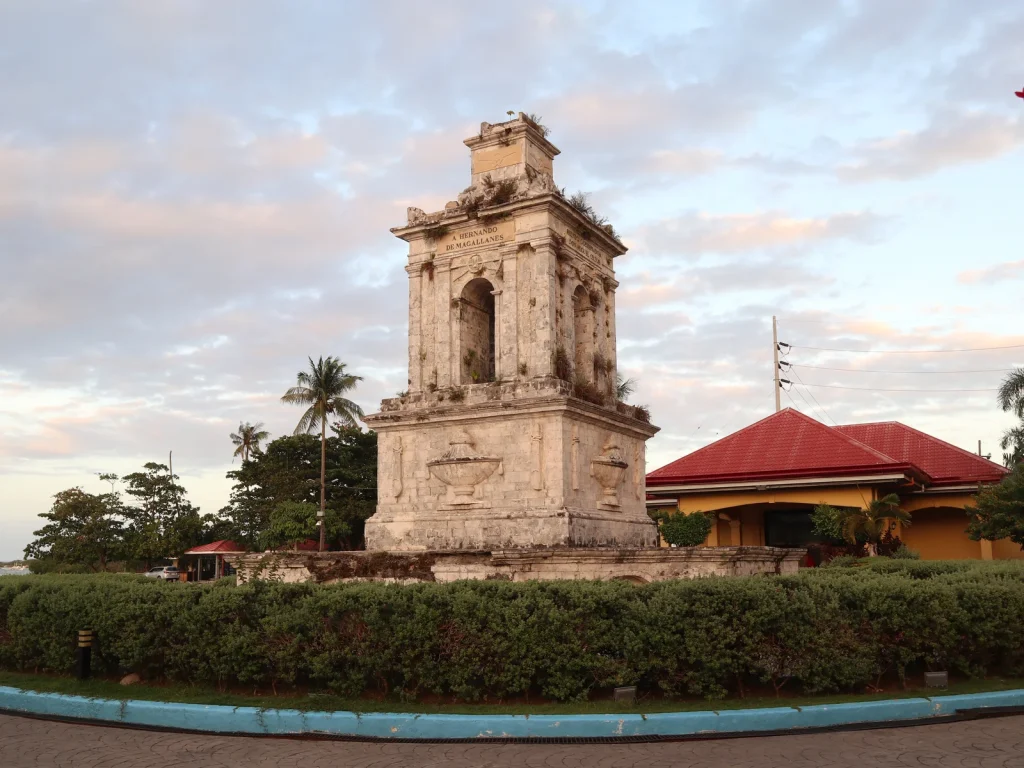
What makes the shrine unusual is who shares it. A few steps from the bronze Lapulapu stands a coral-stone obelisk raised by the Spanish in 1866 and inscribed A Hernando de Magallanes. Winner and loser are neighbors, which feels right. In 2021 the Philippines marked the quincentennial of the Victory at Mactan, restored both monuments, and settled on a single official spelling of the hero’s name: Lapulapu, one word. Five hundred years on, the man Pigafetta could barely describe has a city, a day, and the last word.
100% FREE • GRANT-FUNDED • AWARD-WINNING DIGITAL LEARNING
Empires & Interconnections (1450-1750)
Six lives in the age when the world got smaller: Ioannina inside the walls of Constantinople in 1453, Luis chasing conquistador gold in Peru in 1555, Ishi advising a warlord on the Europeans in seventeenth-century Japan, William among the first Africans sold at Jamestown in 1619, Jonas in the pirate republic of Nassau, and Arun in Mughal Bengal as the East India Company closes in. Aligned to AP World History. Best Literacy Platform at the 2024 Anthem Awards.
Educator tip: Have students read Pigafetta’s account of Mactan alongside this article and list every decision Magellan made from the ultimatum to the burning of the houses, then rate each one from the islanders’ point of view. Follow with the Luis chapter of Empires & Interconnections and a short written comparison of what a Spanish adventurer in 1555 could have learned from 1521.
Explore Empires & Interconnections
Explore the Full History Adventures Portfolio
Al-Khwarizmi Docudrama | Plague of Athens VR | Plague of Athens Web App | Black Death Interactive | Empires & Interconnections | Revolutions & Industrialization
Sources and further reading
- Watch: Ferdinand Magellan and the Battle of Mactan, The History Guy: History Deserves to Be Remembered (YouTube, 2017). A brisk, well-sourced short on the battle and its aftermath.
- Stream: Secrets of the Dead: Magellan’s Crossing (PBS, 2021). The full voyage, from Seville to the Spice Islands, with Mactan as its turning point.
- Listen: Ferdinand Magellan, Parts 1 to 4, The Explorers Podcast. Part 4 covers the fight in the surf and Elcano’s long way home.
- Play: Europa Universalis IV (Paradox Interactive, 2013). Start as Castile in 1444 and try to reach the Moluccas before Portugal does, or play Cebu and hold the islands against everyone.
- Read: Antonio Pigafetta, The First Voyage around the World, 1519-1522, edited by Theodore J. Cachey Jr. (University of Toronto Press, 2007). The eyewitness account, and still a page-turner.
- Read: Laurence Bergreen, Over the Edge of the World: Magellan’s Terrifying Circumnavigation of the Globe (William Morrow, 2003). The popular narrative history of the voyage.
- Read: William Henry Scott, Barangay: Sixteenth-Century Philippine Culture and Society (Ateneo de Manila University Press, 1994). The scholarly standard on the world Lapulapu actually lived in.
- Read: Felipe Fernández-Armesto, Straits: Beyond the Myth of Magellan (University of California Press, 2022). The contrarian biography, hard on Magellan and fascinating on why.
Featured image: Antonio Pigafetta, map of Bohol, Mactan (Mattan) and Cebu (Zubu) from the French manuscript of his account of Magellan’s voyage, c. 1525 (detail), Beinecke Rare Book and Manuscript Library, Yale University. The banner reads Icy mourut le capitaine general, here died the Captain General. Public domain, via the World Digital Library and Wikimedia Commons.
By Spencer Striker, PhD, Professor of Digital Media Design at Northwestern University in Qatar, founding member of NU-Q’s Artificial Intelligence and Media Lab (AIM-LAB), and creator of History Adventures and Al-Khwarizmi: Father of Algebra & the Algorithm.